For travelers who want to understand what Argentine wine has become — and why the Andes are the reason.
Mendoza is a wine region with a 7,000-metre mountain at its back. That is not a metaphor — Aconcagua is two hours from the vineyards, and everything that makes the wine here remarkable comes from the same source. The altitude. The dry, thin air. The meltwater that crosses the desert from the Andes. Without the mountain, there is no Malbec worth talking about.
Most travelers come for the wine. The ones who leave most satisfied also went up to the Andes for a day — and understood that the two are the same story, told from different angles.
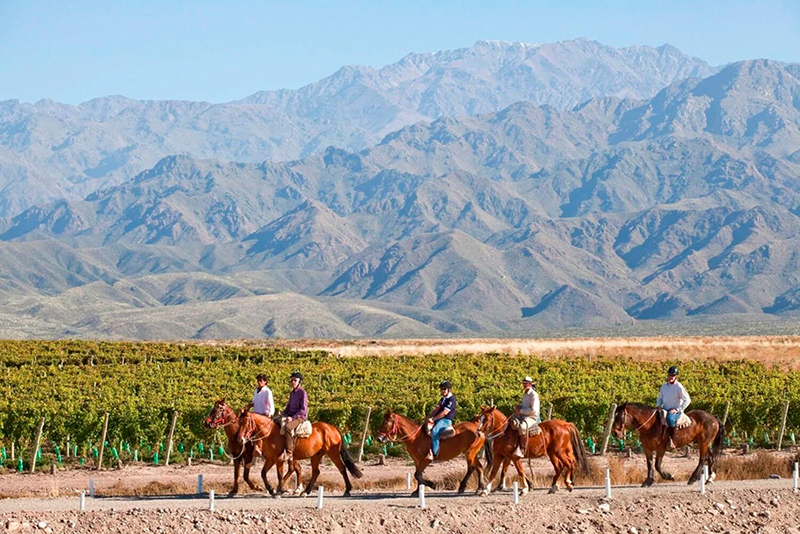
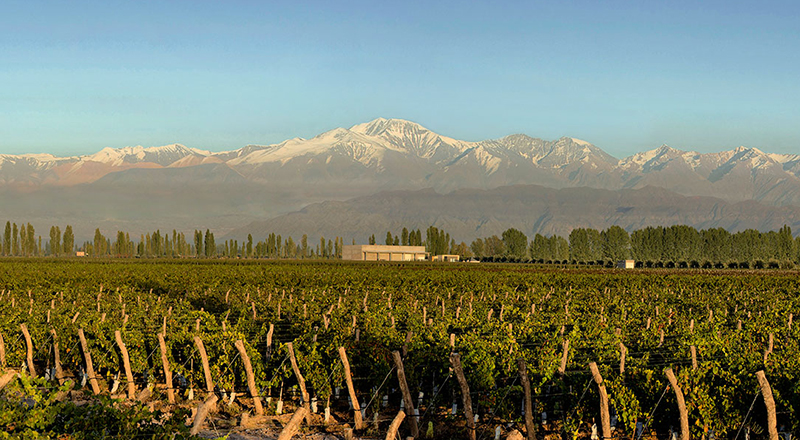
Mendoza's vineyards sit between 600 and 1,500 metres above sea level — among the highest in the world.
Aconcagua dominates the horizon and changes how you understand the wine grown in its shadow.
Every vineyard, tree and park exists because of water carried down from the Andes.
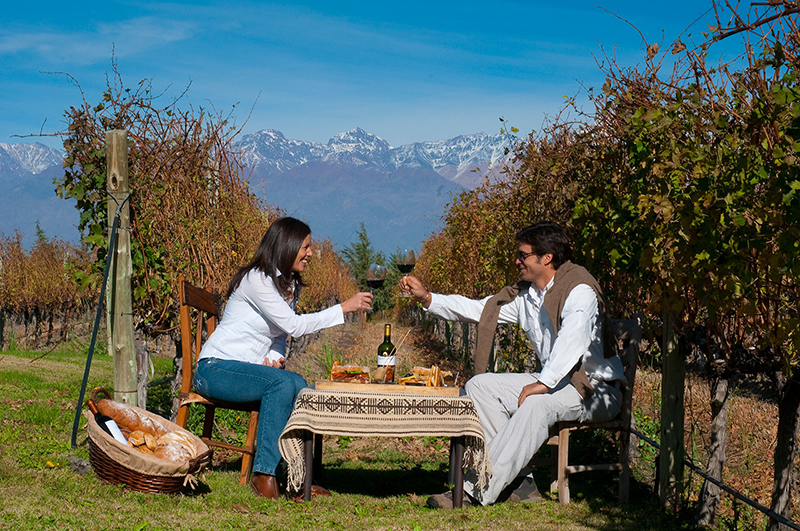
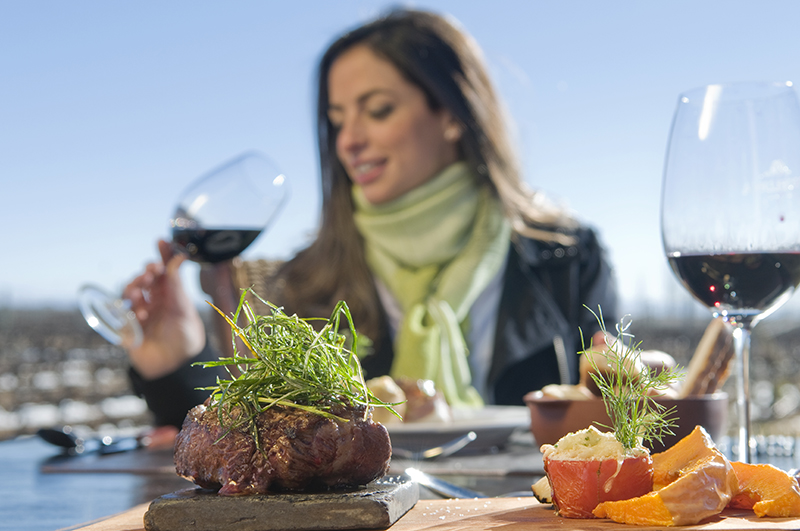
Mendoza is generous, unhurried and built around the long lunch. A good winery visit here is not a tasting — it is three hours at a table, four or five courses, the winemaker stopping by, the conversation drifting. It is one of the few places in Argentina where the experience the locals have and the experience the travelers have are essentially the same.
These are not fixed routes. They are starting points.
Lunch at a winery in the Uco Valley. Five courses, four wines, the Andes filling the window.
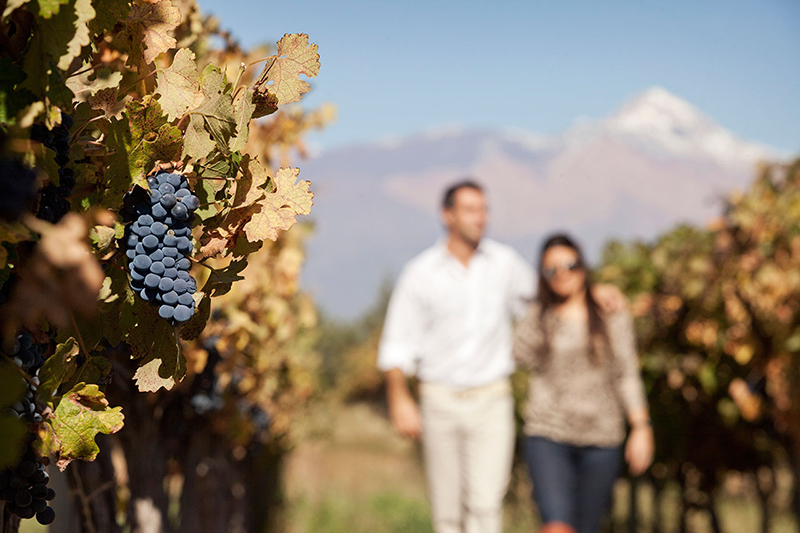
The first sip of a Malbec at the altitude where it was grown.
Driving toward Aconcagua on Ruta 7. The vineyards give way to mountain.
A tasting with the winemaker, not a sommelier. Wine becomes biography.
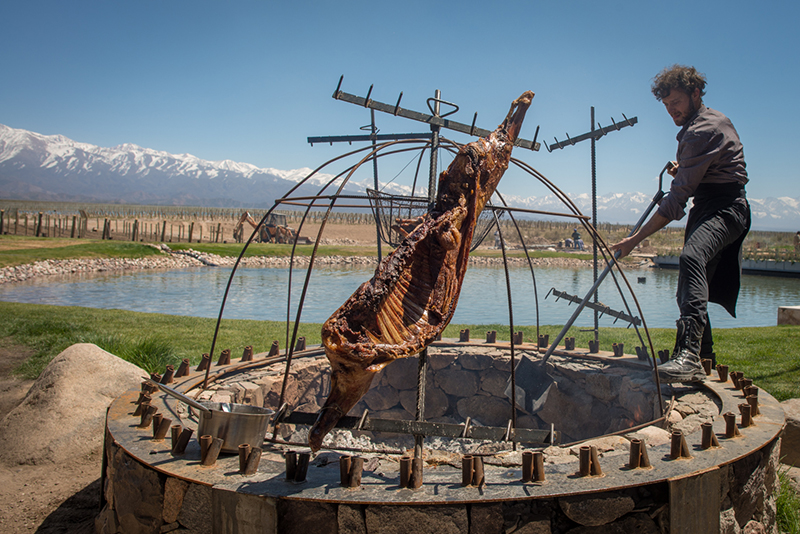
An asado at a small finca outside the city. The afternoon becomes evening without anyone deciding it should.
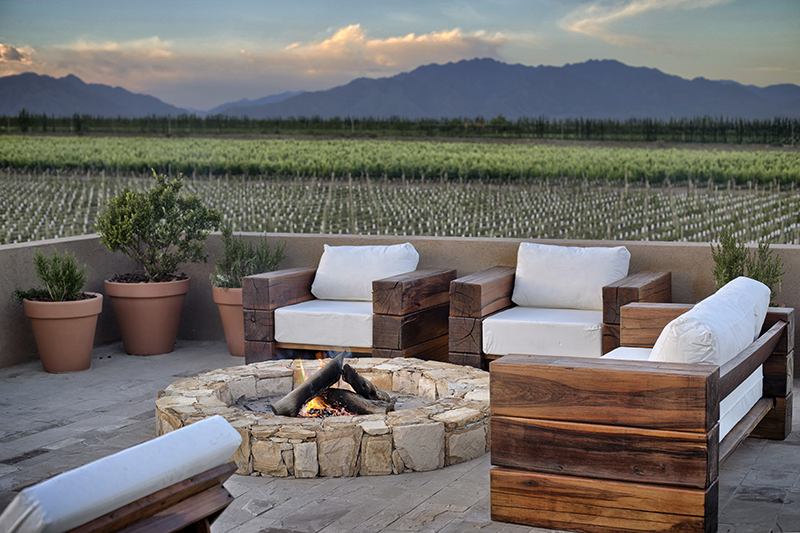
Looking back at the Andes from the vineyard in late afternoon as the shadow climbs the mountain.
Dry, warm and increasingly green. One of the two moments when Mendoza is at its most photogenic.
Hot, dry and bright. Long lunches happen under vines and the Andes stay fully accessible.
Harvest season. The vineyards turn gold and red and the wineries are in full activity.
Cold, dry and sharply lit. Snow on the Andes, quiet vineyards and exceptional mountain views.
Mendoza (MDZ) has multiple daily connections from Buenos Aires and direct flights from Santiago de Chile.
A private driver-guide is the only sensible way to do wine days properly. The valleys are spread out and long lunches are part of the experience.
Enough for two wine valleys done properly plus a day in the Andes.
Time to understand Mendoza on its own terms and spend full days in each valley.
Time to combine Mendoza's two great stories properly: the vineyards and the high Andes.
If you're wondering whether to combine Mendoza with Buenos Aires or Patagonia, how many days to give the valleys versus the mountain, or which vineyard lodges actually live up to their reputation — that is exactly what the free call is for.