Iguazú

One of the few
places in the world
where the photographs
‐ do not prepare you.

For travelers who want to experience the falls ‐ and then decide how much further they want to go.

The destination

An honest
introduction

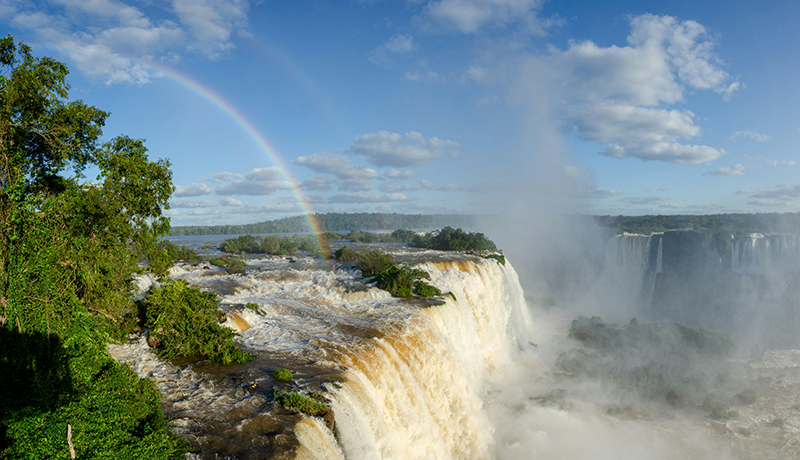
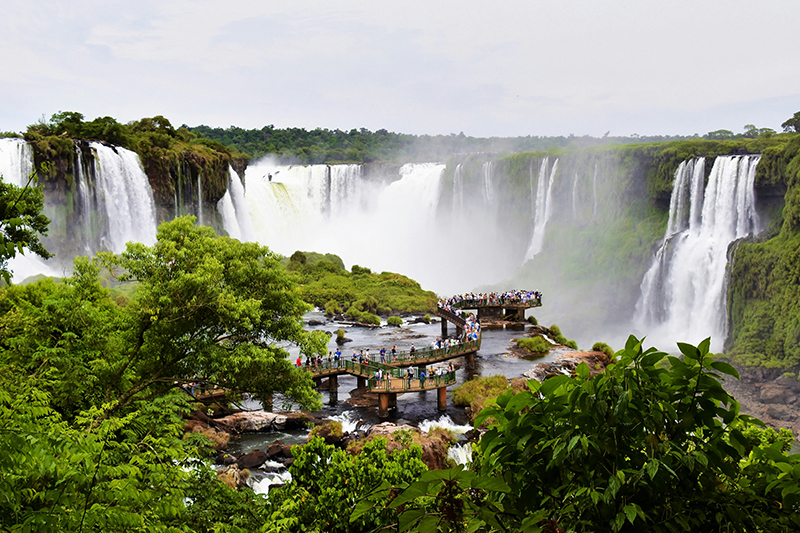
Iguazú is one of the rare places that earns its reputation without needing help. Two hundred and seventy-five waterfalls across nearly three kilometres of basalt cliff, in the middle of a subtropical jungle that has been here for millions of years. The Garganta del Diablo drops eighty metres in a single fall, with a roar you hear before you see it. No amount of photography prepares you for standing in front of it.
It is also, to be direct, one of the most visited national parks in South America. The falls are extraordinary and they are crowded. The question for a trip like this is not how to make Iguazú feel exclusive ‐ it isn't, and pretending otherwise would be dishonest. The question is how to experience it well: at the right time of day, at the right pace, with enough space around it to actually land.
Beyond the falls, there is one layer we think is genuinely worth adding ‐ and one we think most visitors skip for the wrong reasons.
The team
mountain_steam

275 falls, 3 kilometres of cliff

Not one waterfall ‐ hundreds, along the bend of a river the Guaraní called y guasú: big water. The volume at the Garganta del Diablo is among the most powerful on Earth.

forest

One of the last Atlantic Forests

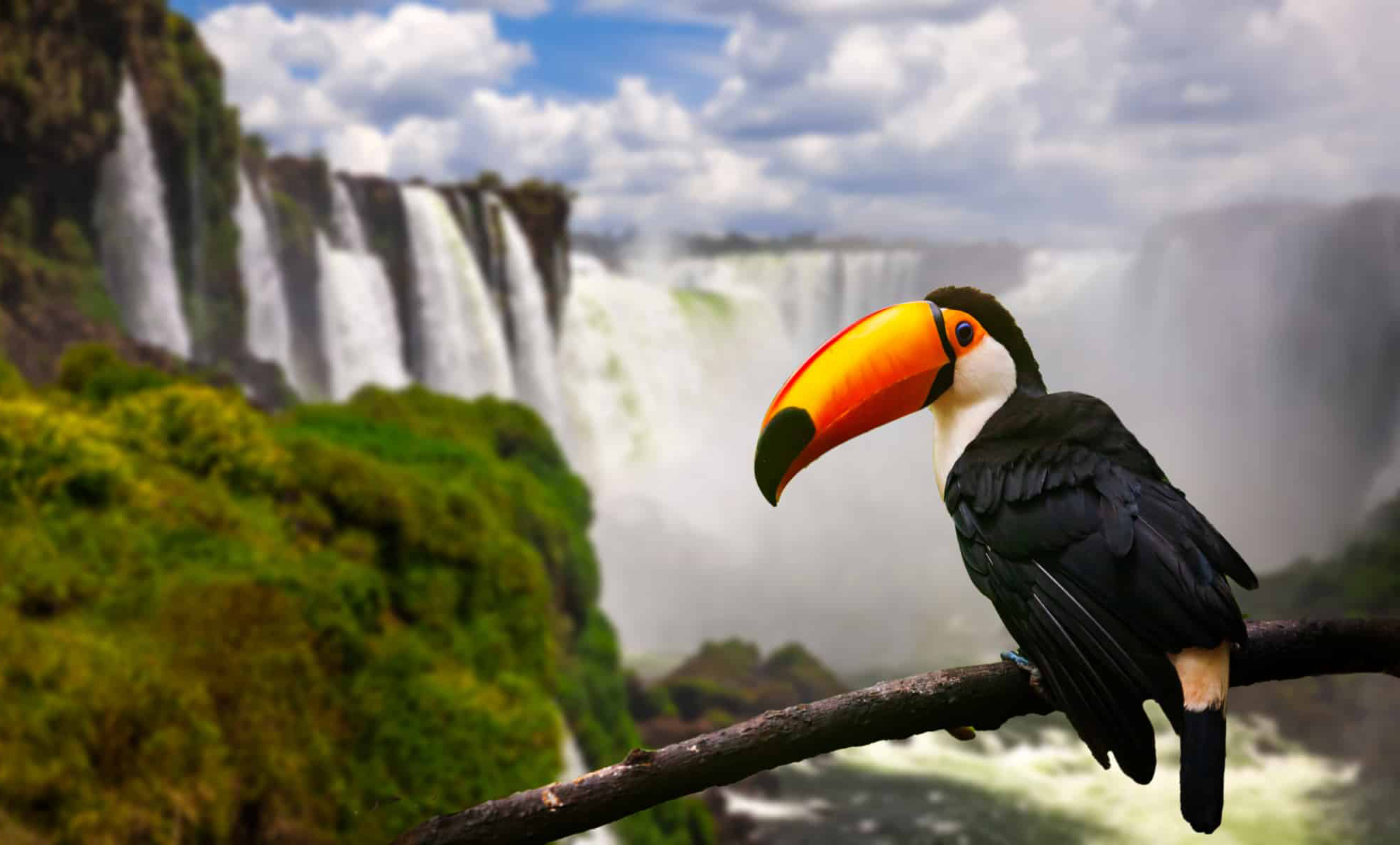
Less than 7% of the original Atlantic Forest remains. The national park is one of its last great refuges ‐ over 400 bird species, jaguars, tapirs, capuchin monkeys, hundreds of butterfly species.

bedtime

Full moon visits

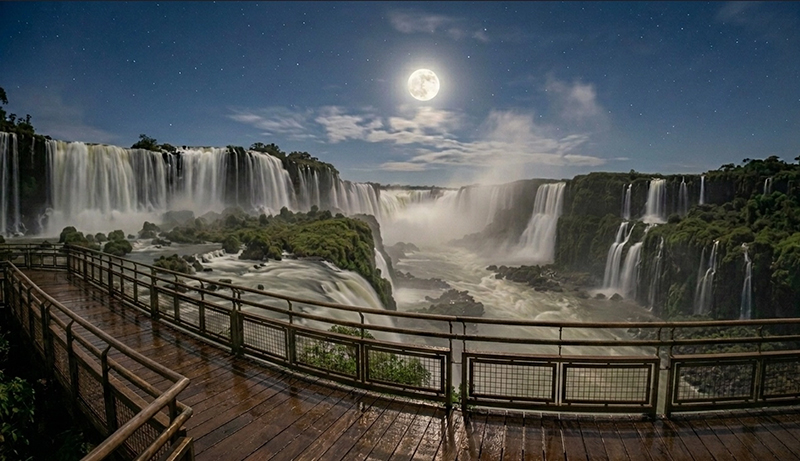
The park opens specific circuits on full moon nights. A different experience ‐ quieter, with different light and almost no crowds. Worth planning around if the timing aligns.

Is Iguazú right for you?

Iguazú is for you if

  • check_circle Scale and spectacle move you ‐ you want to stand in front of something genuinely overwhelming
  • check_circle You're as interested in the jungle that holds the falls as the falls themselves
  • check_circle You're comfortable with heat, humidity and a destination that is popular and deserves to be

Iguazú is not the right starting point if

  • close Heat is a real issue ‐ it is genuinely hot and humid for most of the year
  • close You're looking for depth of culture, city life or regional layering ‐ Iguazú doesn't offer that
  • close You want to feel far from other travelers ‐ this is one of Argentina's most visited parks and it feels that way
  • close You need a full week of content ‐ two or three nights, done well, is the honest shape of this trip
Ways into Iguazú

One waterfall.
More than one way
to meet it.


NO PRODUCTS AVAILABLE

Moments that define this region
01

Walking onto the upper boardwalk and understanding, for the first time, that no photograph you have seen caught any of this properly.

02

Standing above the Garganta del Diablo. The water below you, beside you, somehow above you. The spray on your face. The roar that makes conversation pointless, which is exactly right.

03

Eight in the morning, before the buses arrive. The boardwalks nearly empty. Toucans calling from the canopy. The falls louder than they'll be at any other hour.

04

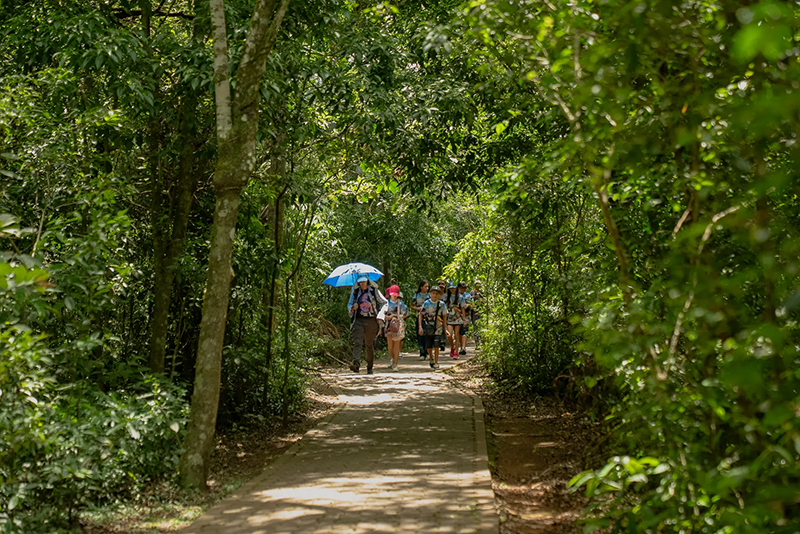
A forest walk at La Lorenza in the afternoon. A morpho butterfly the size of a hand. The realisation that the falls are not the whole story ‐ they are one sentence in a much longer one.

05

The falls on a full moon night. The light is different. The crowds are gone. It is a quieter version of the same place, and for some travelers, the one they remember.

When to go

Iguazú is open all year
‐ but the experience changes a lot
from season to season.

local_florist Spring • Sep - Nov
Spring • Sep - Nov

Warm, humid and increasingly green. Temperatures between 22°C and 30°C (72°F–86°F). The river is at a strong, healthy flow after winter, the jungle is in full activity and wildlife is more visible than in the dry months. Afternoon thunderstorms are possible. A favourite among repeat travelers — strong falls, fewer crowds than summer, and a more comfortable climate.

brightness_5 Summer • Dec - Feb
Summer • Dec - Feb

Hot and humid — daytime temperatures reach 30°C–35°C (86°F–95°F), often higher, with humidity above 80%. The river is at its peak after summer rains, which means the falls are at their most powerful. This is also the busiest season, especially in January. Worth it for the volume of water; demanding for those who don't handle heat well.

air Autumn • Mar - May
Autumn • Mar - May

The most balanced season. Temperatures fall to 20°C–28°C, humidity drops and the falls retain their strength from the summer rains. The crowds thin after Easter. The light through the spray is at its best — long, low and warm. For many travelers who have been to Iguazú before, this is when they return.

ac_unit Winter • Jun - Aug
Winter • Jun - Aug

Mild, drier and very pleasant — daytime highs of 18°C–24°C, cooler at night. Humidity drops sharply. The river is at its lowest flow of the year, which means the falls are gentler and you can see more of the rock structure beneath them. Wildlife is harder to spot but the walking is easy. A different Iguazú — less overwhelming, more contemplative.

Getting there & getting around

travel How to get there

Puerto Iguazú (IGR) has its own airport with multiple daily connections from Aeroparque (AEP) in Buenos Aires — flight time around 1 hour 50 minutes. The airport sits twenty minutes from the town and from the entrance to the National Park.

directions_bus Getting around

Logistics here are simpler than most Argentine destinations. A private driver-guide or tour handles the park visits and excursions. Inside the park, an internal train and well-marked boardwalks do the rest. Distances are short.

How long do you need
1

2 nights • The honest minimum

Enough for one full day at the falls — ideally split between morning and late afternoon — plus time to recover between visits. Works well combined with Buenos Aires. Compresses the experience but doesn't betray it.

2

3–4 nights • The slower version

Two visits to the falls at different hours, time in the jungle with a private guide, space for the early morning before the crowds arrive. The version of Iguazú that stays with you.

3

A different trip entirely

Iguazú is one of the few places where the difference between two nights and four is not a doubling of comfort — it is a different trip entirely.

Ready to design your Iguazú?

Iguazú is more
than a photograph.
The question is how much more
you want it to be.

If you're wondering whether two nights is enough, whether to add the Brazilian side, or whether to extend deeper into Misiones — that is exactly what the free call is for.

Begin Your Journey No commitment. We start by listening.
Powered by Consult-ar