For travelers who want to know how Buenos Aires is actually lived ‐ not just how it looks.
Buenos Aires is not what most people expect. They arrive prepared for something European ‐ the architecture, the wide avenues, the café culture ‐ and find all of that. But underneath it, something harder to name. A city that is restless and melancholic at the same time. That argues about everything and still stays at the table. That has been through enough to be unsentimental ‐ and yet remains, stubbornly, one of the most generous cities in the world.
More than almost any other city in the world ‐ concentrated along a single avenue called Corrientes.
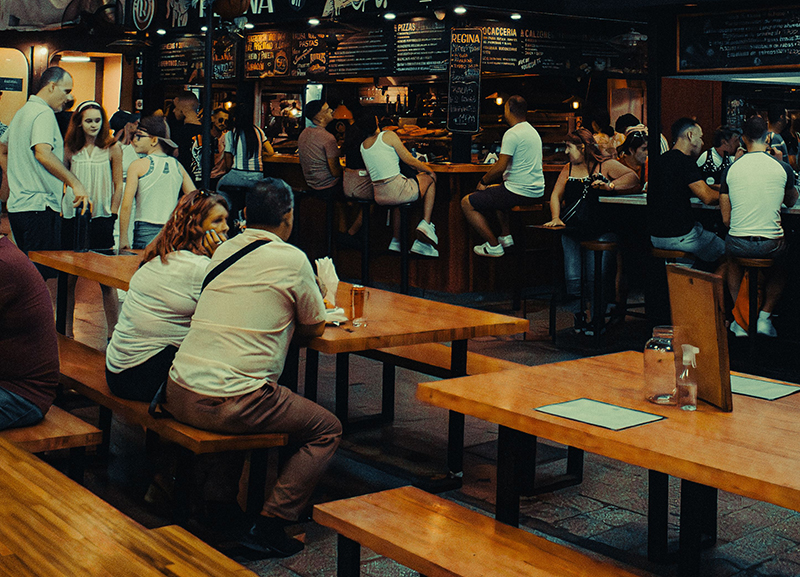
Restaurants fill after nine. The table next to you will still be there at midnight. This is not inefficiency ‐ it is culture.
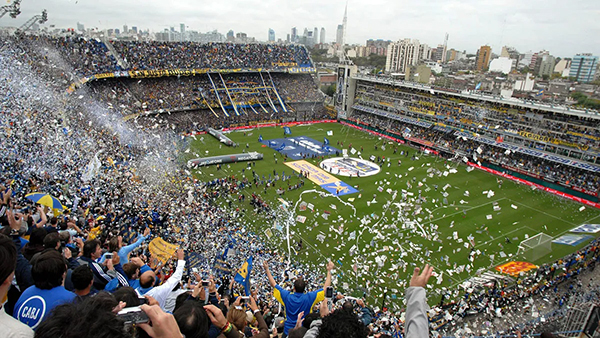
Your club here is not a preference ‐ it is an identity. The stadium on a Sunday is one of the most alive places in the city.
What makes Buenos Aires genuinely extraordinary is not any single thing. It is the accumulation. And the moment ‐ usually around day three or four ‐ when the city stops feeling foreign and starts feeling like somewhere you could stay.
NO PRODUCTS AVAILABLE
Sitting at a corner table while the waiter recommends the wine the way a friend would ‐ with conviction and without a menu.
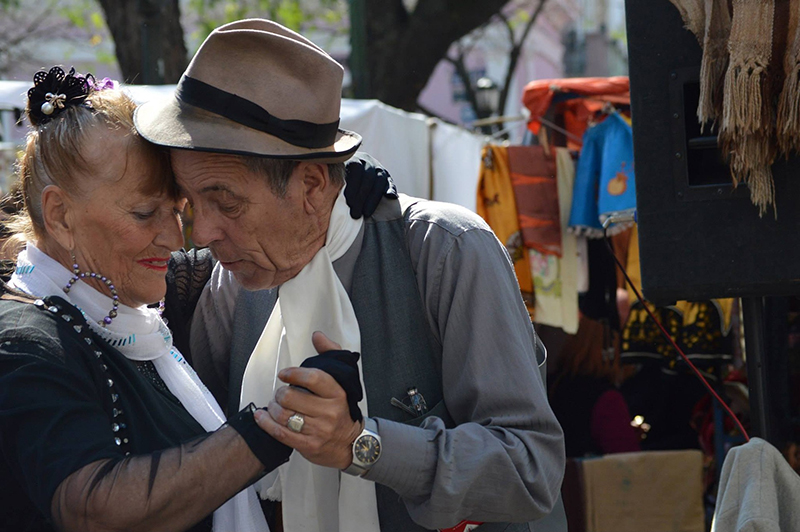
The sound of a milonga from the street before you enter. The particular combination of bandoneón and conversation and shoes on a wooden floor that only exists here.
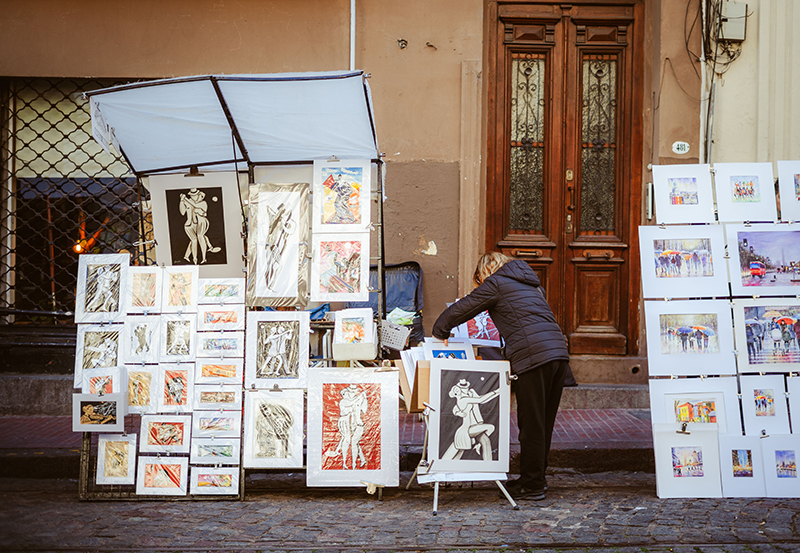
A Sunday morning at the San Telmo market when the light is low and the city moves slowly.
Two strangers arguing at a café table ‐ voices raised, hands moving, completely absorbed. Ten minutes later they are laughing. This is not conflict. This is how people talk here.
A Sunday at the stadium. The noise before the players even appear. The songs that seventy thousand people know by heart.
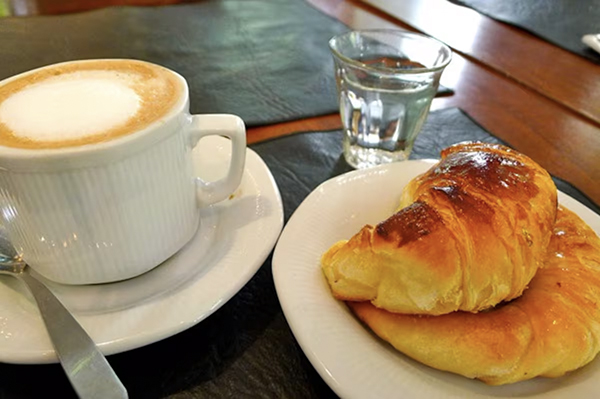
Five in the afternoon. A café con leche, two medialunas, nowhere to be. The table next to you has been there for an hour and shows no sign of leaving.
Temperatures between 14°C and 25°C (57°F-77°F). Comfortable during the day, fresh at night ‐ bring a light jacket for the evenings. October is the rainiest month, so expect some showers. November is when the jacarandas flower and the city looks its best. The most reliable time to visit.
Hot and humid ‐ daytime highs between 28°C and 32°C (82°F-90°F) with humidity regularly above 70%. Thunderstorms are common in the afternoon. The city empties as locals head to the coast. Pack light, breathable clothes and expect to spend parts of the day indoors. Worth it for the long evenings ‐ but go in knowing what to expect.
Temperatures drop gradually to between 20°C and 25°C by day, cooler at night. Humidity falls, skies clear and the weather stabilises. The cultural calendar ‐ theatre, cinema, art ‐ is in full swing. Locals say this is their favourite season.
Mild by most standards ‐ daytime highs between 12°C and 16°C, dropping to 6°C-10°C at night. Humid, with the occasional cold snap when the Pampero wind arrives from the south. Snow is almost unheard of. Bring layers and a proper coat for the evenings. The city doesn't slow down ‐ it just moves indoors. Long dinners, theatre, milongas. A different Buenos Aires, worth knowing.
Buenos Aires is served by two airports. Ezeiza (EZE) handles all international flights ‐ direct connections from London (˜14 hrs), Miami (˜9 hrs) and Madrid (˜13 hrs). Aeroparque (AEP), closer to the city centre, handles domestic connections to the rest of Argentina.
Within neighbourhoods, Buenos Aires is walkable. Between them, Uber and Cabify operate reliably throughout the city. The subte (metro) covers the main corridors efficiently. A local SIM or data plan makes everything considerably easier ‐ maps, rideshare and translation all in one.
Enough to find the city's rhythm and understand two or three neighbourhoods properly. You won't feel settled ‐ but you'll feel the city begin to open. Works well as the start or end of a longer journey through Argentina.
The point at which Buenos Aires starts to make sense on its own terms. You find a café to return to. You stop looking at the map. With a day or two to spare, the city's surroundings become possible ‐ the river delta at Tigre, a gaucho estancia an hour from the centre, or the quiet village of San Antonio de Areco where the Pampas begin.
Time to understand Buenos Aires on its own terms ‐ not as a list of things to see, but as a city to inhabit. You follow the cultural calendar: a play at the San Martín, a Sunday milonga, an opening at a gallery in San Telmo. You become a regular somewhere. You move between neighbourhoods with the kind of familiarity that changes what you notice ‐ the same street looks different on a Tuesday morning than it did on a Saturday night.
If you have days to spare beyond the city, the surroundings offer something completely different: the river channels of the Tigre Delta accessible only by boat, or the gaucho estancias of San Antonio de Areco an hour away, where the Pampas begin and Buenos Aires feels very far.
For the traveler who wants Argentina to start ‐ and end ‐ in one city.
If you're wondering how much time you actually need, or whether Buenos Aires should be the centre of your journey or the beginning of a longer one ‐ that is exactly what the free call is for.